Engineering behind every printed part
A printed part is only as good as its material, its print direction and its fit. These are the rules we work to. The figures are typical starting values; fit-critical parts get a test print.
Materials and where they fit
Every filament below prints on our Bambu Lab X2D. Ratings compare them with each other; exact heat and strength figures come from the filament maker's datasheet, checked for each job.
| Material | Heat | Sunlight | Stiffness | Good for | Status |
|---|---|---|---|---|---|
| PLA | Low | Poor | Stiff, brittle | Prototypes, fit checks and indoor parts away from heat; softens in a hot car or near an appliance | Offered |
| PETG | Medium | Fair | Tough, slight give | Brackets, housings and clips away from heat; damp areas | Offered |
| ASA | Medium-high | Good | Stiff | Window cranks, vent covers, anything near a sunny window or outdoors | Offered |
| ABS | Medium-high | Poor | Stiff | Heat-tolerant housings, parts finished by sanding or drilling | Offered |
| TPU | Low-medium | Fair | Flexible | Feet, bumpers, grips, soft seals | Offered |
| Nylon (PA6, PA12) | High | Fair | Tough, wear-resistant | Gears, latches and clips that flex or rub | Offered |
| Carbon- and glass-filled (PA-CF, PETG-CF, ASA-CF, PPA-CF/GF) | High to very high | Fair to good | Very stiff | Brackets and mounts that must not flex, parts near motors and heat | Offered |
| Polycarbonate (PC) | High | Fair | Very tough | Impact and heat parts, clear covers | Offered |
| PVA, BVOH support | — | — | Dissolves in water | Support under complex parts, washed away after printing | Offered |
Heated chamber
ASA, ABS, nylon and PC shrink as they cool and warp in open air. The X2D's chamber is heated to 65 °C to hold them flat.
Drying
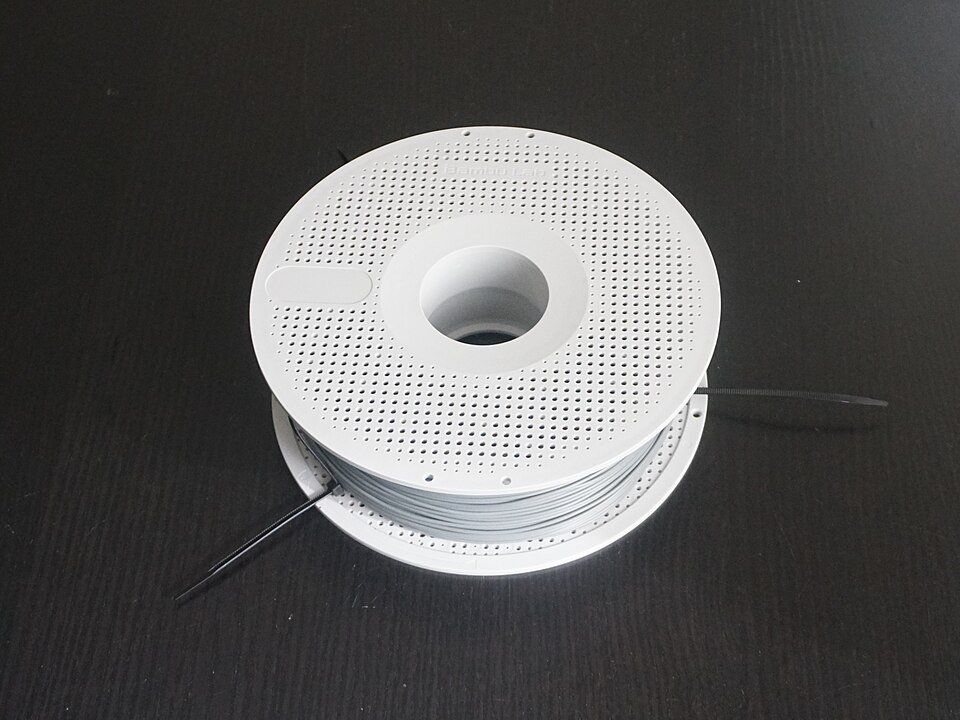
Nylon, PC and PVA absorb water from the air. Wet filament prints weak and stringy, so spools are dried before printing and stored sealed.
Hardened nozzles
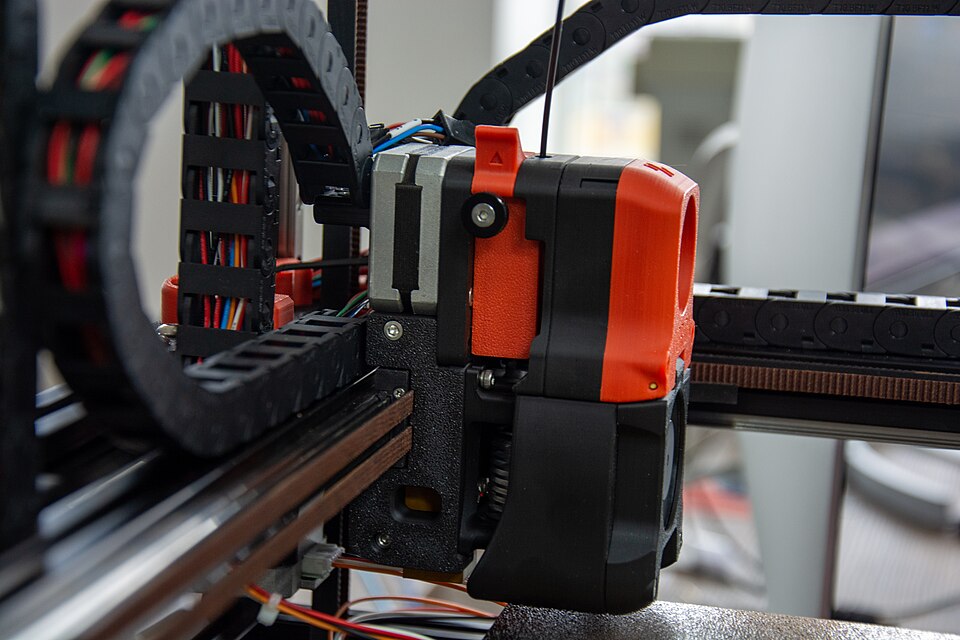
Carbon- and glass-filled filaments wear brass nozzles out within a few spools. The X2D's nozzles are hardened steel, and reach 300 °C.
Design rules for printed parts
Typical values for a 0.4 mm nozzle. A part redrawn from a moulded original is adjusted to these, since a moulded wall is often too thin to print as-is.
- Wall thickness
1.2 mm minimum, three outlines. 2 mm or more where the wall carries load.
- General tolerance
About ±0.2 mm on most features. Tighter fits are tuned on a test print.
- Holes
Print slightly undersize. Critical holes are drilled or reamed to size afterwards.
- Sliding fit
About 0.2 mm clearance on each side. Press fits start at 0 to 0.1 mm and are tried first.
- Overhangs
Up to about 45° print clean. Steeper faces are reoriented, chamfered or supported.
- Screw threads
Brass heat-set inserts for screws that are removed often; printed threads only for coarse, light-duty use.
- Layer height
0.12 to 0.2 mm for small or visible parts, 0.28 mm for large plain ones.
- Inner corners
Filleted at 1 mm or more, since sharp inside corners are where printed parts crack.
Print direction sets the strength
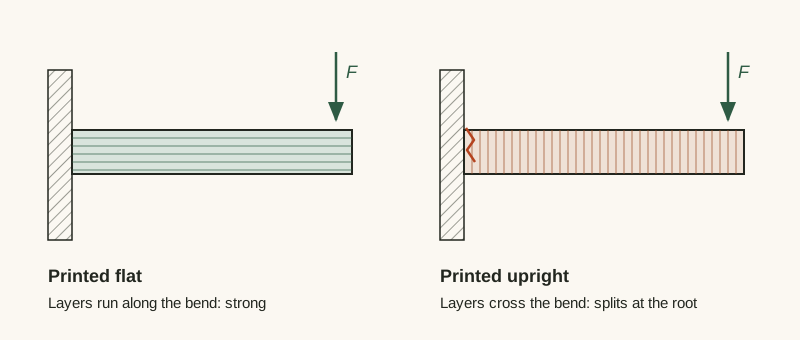
Plastic is laid down one layer at a time, and the bond between layers is weaker than the plastic itself. So clips, hooks and brackets are laid on the bed so the bending load runs along the layers.
Outlines before infill
Most of a printed part's strength is in its outer walls. A loaded part gets more outlines rather than more infill.
Split when needed
A part that is loaded two ways can be printed in two pieces, oriented for each load, then bonded or screwed.
Face that matters
The face against the bed comes out flattest. We put the mating or sealing face there where we can.
Measuring a part for a good fit
Most failed reprints come from one wrong measurement. We measure twice and test the fit features before the full part.
- Measure
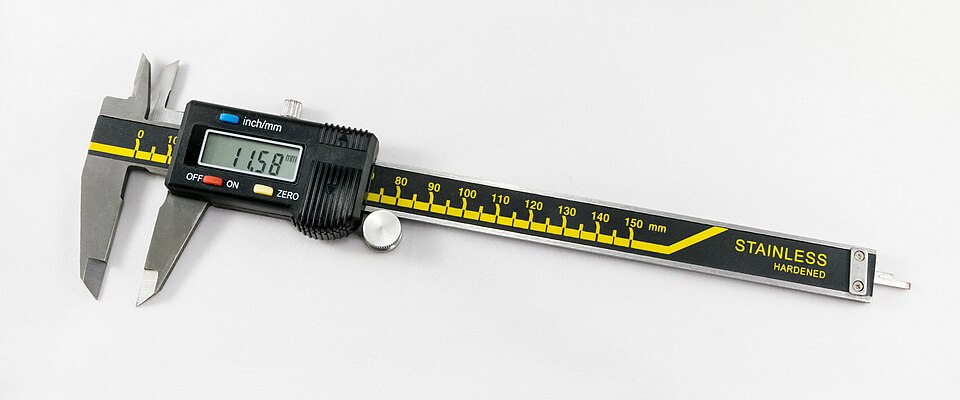
Digital calipers on every mating feature: bores, shafts, snap tabs, screw centres.
- Model the fit first
Mating features are drawn from the parts they meet, not from the worn original.
- Test coupon
A thin slice with just the fit features prints in minutes and proves the sizes.
- Complex shapes
Curved or organic parts may need a 3D scan. We say so in the quote.